A Favourite Shakespeare Play: ‘Macbeth’

Macbeth is a play that has always fascinated people, engaging their superstitions as well as their imaginations. For this reason, its often called The Scottish Play by actors and theatre folk, as it’s believed to be unlucky to say ‘Macbeth’ in a theatre.
It’s a cracker of a story. The supernatural ‘weird sisters’ tell Macbeth he’s going to be Thane of Cawdor, and then tell him he is going to be king. In response, Macbeth does everything in his power to make it happen, only to be haunted by his victims and unable to actually enjoy his success when it does. You really do have to wonder how it would have all worked out if he’d responded with, “That’s nice!” and let things happen as they would. 

Of course, you can’t just blame it all on Macbeth. His wife – whom I like to call Lady Macdeath – plays a significant part in engineering him onto the throne, mostly by bullying him into doing things he doesn’t really want to do.

The play has some fabulous macabre moments— the witches are spooky, their prophecies are uncanny, and you can bet your last dollar you don’t want to eat what they’re cooking in that cauldron. Even better is the part where Banquo’s ghost shows up for dinner shaking his “gory locks”: that is my favourite scene in the whole play.

Laced with suspense, intrigue, and dramatic irony, ‘Macbeth’ keeps the audience hooked to the very end, even though we all know by now how it’s going to work out. There’s more magic than just “Double, double, toil and trouble / Fire burn and cauldron bubble” in this play. 

Strangely enough, reading the text has brought me some odd comfort this weekend as I contemplate the fate of people who manipulate, lie and use others for their own nefarious purposes. I have taken dark satisfaction in seeing those who chose to do evil get what they deserved in the end. It may not be gracious, but it is quite therapeutic to think that maybe the Fates really do have things under control. Sometimes you need to take your catharsis wherever you can get it. 

That, of course, is the genius of all Shakespeare’s plays. He deals in the emotions we all understand – ambition, greed, love, anger, jealousy, pride, and the experience of being at the receiving end of the bad behaviour of others. The language may have changed slightly, but human nature certainly has not. 

Shakespeare doesn’t have to work hard to make the audience dislike Macbeth and his cold-hearted shrew of a wife: we get it. We have all seen people succeed by means of deceiving and manipulating others, or by stabbing someone else in the back, and we don’t like them, either.
Things For Which I Am Thankful Today

Today, I am feeling very low. So, I am trying to focus on things for which I am thankful. 

I know it won’t fix things, but it’s a positive distraction from my own misery. 

Most of these are in no particular reason, although the first four are in the right place at the top of the list of what I am thankful for today: 

  • My best friend. For so, so many reasons that I can only barely start to count. 
  • Encouragement from friends. Even when life really sucks, they have my back. 
  • My dog. Abbey the Labby always knows when I need extra love. 
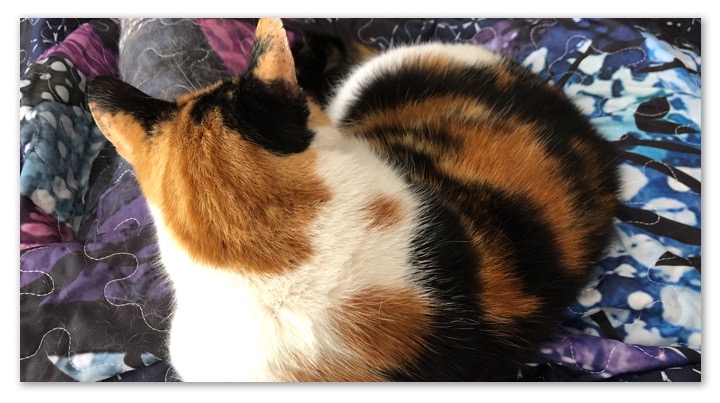
  • Scout Kitty purring on my lap. She, too, has been extra attentive. 
  • The lovely quilt with which I have wrapped myself. It was a gift from my best friend at Christmas time, and given that I can’t hug her today, it’s the next best thing. 
  • The audiobook I’m listening to. It’s good to give my mind something else to do. 
  • Peanut butter on toast. 
  • Coffee. In all honesty, I am thankful for coffee every day. You all should be, too… because even if you’re not drinking it, I am. 
  • Downtime, and the fact that I got all those exams and reports done. I really don’t think I could have maintained that pace much longer. 
  • The fact that I do not have to sit upright on stupid courtroom seats for one single minute of today. My spine has been brutalised this past week. 
  • Pain medication.  Enough said.
  • A Poet’s Curse. I’ve been reading it for therapeutic reasons last night and today. It helps. 

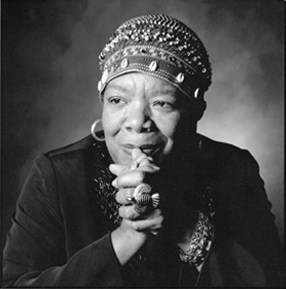
The Best Maya Angelou Poems Everyone Should Read

I really enjoy the Interesting Literature blog. 
It’s well organised and curated, and has lots of excellent posts about all sorts of different literature. There are collections of poems or novels by theme, and various authors’ and poets’ “best of” lists. 

If you liked my Poetry Month or Classic Novels posts, you may well appreciate their posts as much as I do.  (If you missed them, you can find them easily by clicking on those tags on this post.)

This post about Maya Angelou’s poetry is a great example of the excellent content you’ll find at Interesting Literature. 

The Best Maya Angelou Poems Everyone Should Read

Why I Might Never Send Out Another Author Newsletter

They say having an email list is crucial for an author. It’s the one sure-fire way to reach your readers.

I am clearly the exception to that rule. 

Either I really suck at creating newsletters, or my subscribers signed up for the wrong list. 
It’s why I am very reluctant to  send out  newsletters now. 

When I send emails with other people’s books in them, my subscribers click through to those books. 
Do they click through to mine? Nope. 
And sadly, I get as many clicks to unsubscribe as I do on the links in my newsletter. 
It really is quite depressing. 

Yet I don’t do anything different than any of the dozens of authors whose newsletters I receive. Well, that part isn’t strictly true:

I don’t spam my books repeatedly.
I don’t email every week, let alone every day or two, like some do.
I don’t use high pressure sales pitches. 
I don’t beg, and I don’t whine. 
I don’t even include only my own content. I always share other books and bookish events that readers might be interested in. 

I have observed all those things happening in various different authors’ newsletters at different times, and have always tried to avoid doing anything I have found off-putting.

Honestly? I don’t know what I’m doing wrong, but I appear to be doing it consistently. 

I do suspect that maybe newsletter writing is not for me. I’ve given it a fair crack and it hasn’t been at all well received.

For now, I think I’ll stick to blogging. 

Current Status: Exhausted

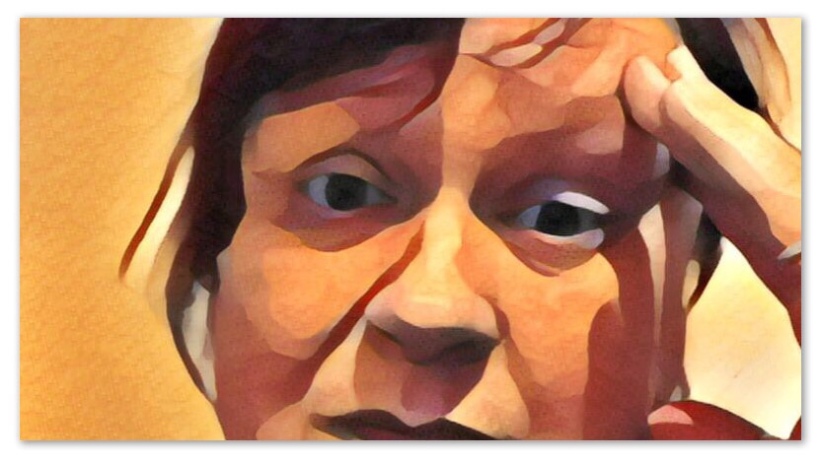
Self Portrait: Exhausted. June 19, 2019.

I don’t write this to complain. I am, however, starting to feel like I need to account for my whereabouts. If this post sounds even remotely whiny, I apologise in advance.

The past few weeks have been brutal. 

A horrid throat infection a few weeks ago laid me low and set me at least ten days behind in my work schedule just before my students sat their mid-year exams. Trying to get those exams marked and into the Semester 1 reports by the deadline was always going to be a challenge, to say the least. 

That task, however, has been complicated by my being at court since last Friday, in the pursuit of justice and hoping for closure in a matter very close to my family and my heart. 

That, in turn, has limited the time available for grading exam papers and writing reports to the weekend and evenings. It also meant that every lesson for this week and next had to be fully prepared, resourced and assigned on the school system before I left work last Thursday afternoon. 

And thus, my waking hours have been fully consumed by matters of high priority that cannot be put off. I’m pulling successive 18 hour days with very little downtime. 

There has been no writing. There has been no reading. My friend taught me to knit on Saturday afternoon, and I completed four rows while I was with her. I haven’t had time to pick that up again yet, either. 

The only relief I have had is the audiobook I am listening to on the drive to and from court each day, and the few minutes I have taken over lunch or dinner to write the day’s blogpost if I am not using one written in advance.

I honestly don’t know how much longer I can keep this up, but I am going to have to try. 

I should finish the exams tonight, but the there is a stack of work and assignments that my students are turning in this week while I am away from school. I need to check, grade and return all of that as soon as I can so the kids get the feedback and help they need to keep on learning and improving.

I don’t know when the court case will finish. I don’t know when I will get all this work done or when I will be able to write again, or read for pleasure. 

Term ends at the end of next week and I am determined to take a well earned break then. Maybe I will sleep for the entire two weeks. 

And if you are one of those people who like to comment on “all those holidays” teachers get?
Don’t. 

What I Like… And What Frustrates Me… About Twitter

It seems to me that people either love Twitter or can’t stand it. I am definitely in the former category, for several reasons:

  • It’s direct. You follow someone? You see their tweets. You don’t follow someone? You live in blissful ignorance.  My feed is full of creative, positive people and exactly zero politicians. It’s a great way to filter reality. 

    Everyone who follows me can see my posts in real time, without any interference from the platform itself. Twitter sends every tweet into the world without trying to make a buck out of me to do it. That in itself is a refreshing change among social media platforms. 
  • Retweets are brilliant for extending your reach easily and painlessly.. With one click, someone else can share your post with all their followers, too. Not only does this take your content further, it can also result in new followers and interactions.
  • It’s brief.  Say what you want to say in 280 characters, preferably less. And that includes your hashtags. 
  • Hashtagging is easy.  Start typing a hashtag, and Twitter will actually suggest the most popular tags for you that start with those letters. It doesn’t get easier than that. 
  • Connecting with others who have the same interests is easy. Once again, hashtags ply a key role here. Searching for a tag you are interested in is a simple way to find people using that tag in their posts. I have found great people, interesting content, and some excellent books doing exactly that. 
  • I also like just scrolling through my feed and seeing what pops up. There is invariably something I want to respond to with a like or a bookish or bloggish post that I want to check out. I can spend as much or as little time as I have, put it down, and come back later. In that sense, it’s pretty cruisy. 
  • Lists. You can create lists of accounts you want to group together. I have lists for authors in different genres. I also have a list for my favourite accounts called “Don’t Miss a Tweet”.

    By going to a particular list in my profile, I can see only the tweets from the accounts in that list. It is a great way to cut through the voluminous white noise of the Twittersphere, and saves heaps of time when I am busy, because I see exactly what I want to and nothing else.

    Lists can be made public or kept private. While I keep my “Don’t Miss a Tweet” list to myself, I make my genre lists public so that if someone is looking for Fantasy Authors or Poets, they can find a ready-made collection in no time flat. I may not have every author of a particular genre in my list, but you may be sure that the ones on my lists are worth checking out.   

That all sounds pretty great, doesn’t it?

However, no social media platform is without its pitfalls. 

My dislikes include, in no particular order:

  • Trolls and fake accounts.  It’s easy for people to hide behind a social media account with a fake name and create mayhem. Whether it’s bullying or bullshit they are into, there’s not really a lot to stop them. 

    I overcome this by being very choosy about who I follow, and by making extensive use of the “unfollow” and “block” functions the minute my spidey senses start tingling. 
  • Direct messages.  Some people appreciate direct messages, but I am not one of them. It seems to me they are all either spamming a product or creepers trying to seduce me into giving them money or naughty photographs. 

    I overcome this by never looking at my inbox. 
  • Tweeting can be hot-and-miss. The life cycle of a tweet is short, and I f followers aren’t online when you tweet, they can miss your content. 

    I overcome this by recycling my content, using different tweets on non-consecutive days so it doesn’t get repetitive or boring. 
  • Clickbait. This is the term for anything exaggerated or sensationalised to make you click on a link to read the story. Ugh. 

    Once again, the blocking function has proven to be really effective in getting rid of these accounts from my feed. 

Overall, I find Twitter much more user-friendly than Facebook, but I doubt that I would if I hadn’t taken the time to learn how to keep my Twitfeed positive and focused, and free of politics, gossip and drama. 

Courting Justice.

Today was hard. 

It was spent in the presence of someone I’d rather never set eyes on again. It was spent in pursuit of justice. It was spent blinking back tears and swallowing my revulsion. 

There is still anger burning within me that I cannot quench. My heart is heavy with the reopening of old wounds. 

And I am powerless, unable to do anything but look on and observe.  

I suppose it’s a good thing that I don’t have the psychic power to set someone on fire from across the room. I could do so, quite willingly, if I were able.

It’s fair to say that if a certain person did happen to spontaneously combust, I would make good use of my bottle of water by drinking it.  

I do not, as a rule, harbour such feelings toward other people. I am fully aware of my own sins and imperfections. But when people commit to the unconscionable and then defend it, any concept of “benefit of the doubt” or “we all make mistakes” is well and truly cast aside. 

I can feel another horror story coming on, but it’s not ready to be written yet. The ideas need to percolate more. And so, I must bide my time.

It will come… and, I trust, so will justice.

A Favourite Shakespeare Play: Richard III

I enjoy many of Shakespeare’s plays, but I do have a few particular favourites. 

At the top of that list would be Richard III. one of the history plays and part of the series that explores the conflict between the Lancaster and York branches of the Plantagenet family tree which we call The Wars of the Roses. 

Shakespeare’s characterisation of Richard as the ultimate villain is so masterful that it shaped how Richard was viewed for centuries afterward. The fact that the history was severely distorted and, at times, entirely fabricated, and that Shakespeare’s representation of Richard was hardly realistic, has nothing to do with it. Shakespeare was a playwright, not a historian, after all, and therefore not inclined  to let the truth get in the way of a great story. 

Of course, it was in his interests to cast Richard in a less than positive light. Shakespeare was very conscious of the fact that his Queen, Elizabeth I, was the granddaughter of Henry Tudor who defeated Richard in battle at Bosworth to become Henry VII. Making Richard less worth of the crown further legitimised Henry’s claim to it, and therefore reinforced her own. In a time when conspiracies and plots against Elizabeth were numerous, the validation of her place on the throne of England was essential for any playwright hoping for royal approval, and patronage from among the upper classes. 

Thus, Shakespeare’s Richard is a man who not only recognises his evil nature but delights in it and determines to see how much he can achieve with it. 

Richard’s choice to pursue evil rather than good from the very start sets the tone of the whole play, and the audience knows they are in for one hell of a ride. His soliloquies deliver profound insights into the evil mind of a villain. They are absolutely fascinating, crafted with intrigue and malice that horrify and enthrall the audience at the same time. It’s riveting stuff. And as Richard puts his schemes into action and celebrates his own cleverness and cunning when they succeed, the audience is acutely aware that they are watching an evil genius in action. 

My favourite character, though, is Margaret, the former queen of Henry VI. She is strong, she is angry, and she is hell-bent on justice. Margaret speaks vitriol and hurls insults and curses so effectively that Cecily, Richard’s own mother, asks Margaret to teach her how it’s done. She attains a level of Shakespearean Insult proficiency that nobody else ever quite managed, not even Richard himself.

The language of the play is magnificent. From the insult competitions to the curses that burn with the brimstone of hell itself, there is not a word wasted in this play. The imagery is incredibly powerful, and the emotive language is so clever and subtle that while the audience may recognise that the characters on stage are being deceived, they don’t realise until after the fact that that they, too, have been positioned and manipulated by a master of the art. 

It is only at the end of the play, when one realises they feel a little sorry for the villainous Richard, that the audience understands how the language and drama of the play have seduced them.   

To take a man from the pages of history, craft him into something hateful, and have the audience still feel something other than hatred for him— albeit, while most likely feeling hatred for him at the same time— is testimony to Shakespeare’s genius as a wordsmith and playwright. 

The Next Challenge: Learning to Knit

Today, with encouragement from my friends Kim and Helen, I am undertaking a new challenge: I’m going to learn to knit. 

It is a skill that has defied me in the past. I have tried— and failed—several times before. As humiliating as that has been, I have remained a little jealous of people who can whip up a scarf or pair of gloves, or a lovely sweater, with relative ease. 

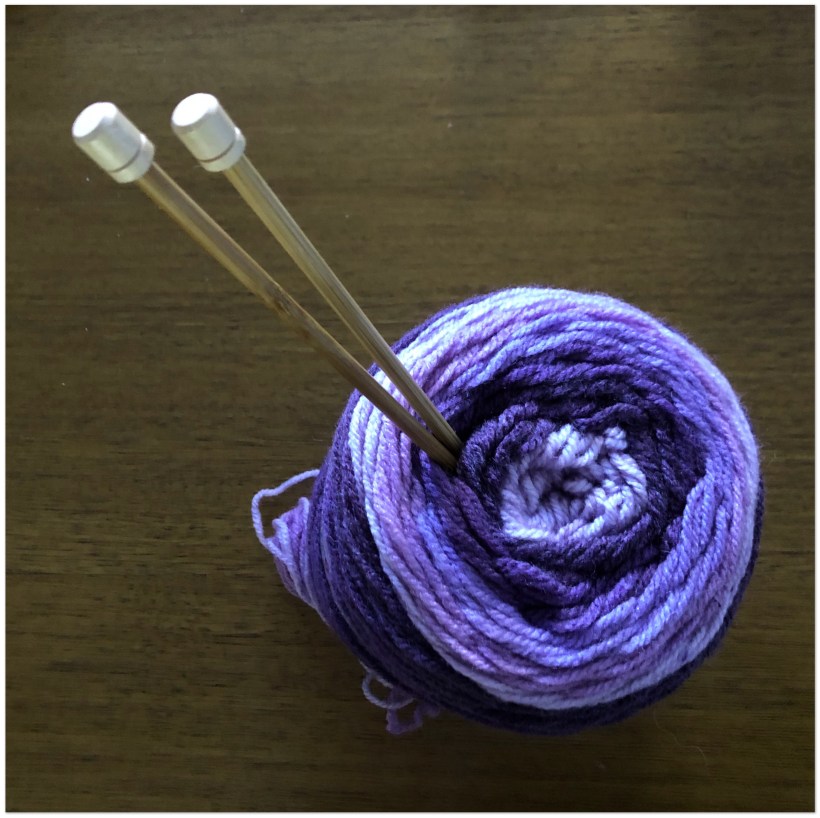
My first project is going to be a scarf. I found some wool that I really love, and will look wonderful as a warm, wide scarf that I can wrap around me when it gets cold. I bought the wool and some bamboo knitting needles just the right size, so I’m ready to start. Helen has promised to teach me this afternoon. 

I’m excited. I’m keen to put my past failures behind me. I’m super keen for the scarf. To be honest, that’s probably the biggest motivator, but there’s nothing wrong with that. Right? 

If I catch on and manage to make a go of it, I will update you on my progress at some point. 
If I don’t… we will never speak of this again. 

New Release: ‘A Rose By Any Other Name’

It’s live! 
My new Shakespeare/fantasy novella launched today at 3pm Sydney/Melbourne time. 

I am really proud of this book, and very excited to be able to introduce it to people as a new release. 

I hope that readers will enjoy the story. I certainly had fun writing it, and still laughed again reading it over while formatting the ebook and paperback. It was a most enjoyable challenge to take two old stories and weave them into something new and fresh. 

‘A Rose By Any Other Name’ is widely available in both paperback and ebook.

***

Excerpt from Chapter 1

Gnarled fingers gripped the doorframe tightly as she watched him riding slowly, as though searching for something.

What does his lordship want now? By the stars, I have precious little left.  Is it not enough that he has built his mansion on my father’s land? And his walls around the trees between which my poor mother is buried? I’ll give him something… although it may not be what he wants.

She grinned cynically, a glimpse of yellowed teeth between thin, hateful lips.

Wait. He’s dismounting… Fool. There are no raspberries yet; it’s still too warm. What kind of moron… picks raspberry leaves? Oh, now… that is interesting. Very interesting.

Straightening her thin body to her full height, she stepped out into the field, heading straight for the thicket of barren raspberry bushes.

“And what are you going to do with those?” she demanded.

Nico jumped at the sudden intrusion. His thoughts scattered at the sight of Malevolenza.

Wizened and ghastly, she had become even thinner and more gaunt since he had last laid eyes on her over twenty years ago. She had watched in angry silence as the walls of the estate were built by his father’s workmen. Her wailing curses had risen like a fortress of sound outside the completed estate walls continuing for what had seemed an eternity on the night they were finished and the gates locked – the night his father had died. Whether it was fear or black magic that had driven the soul from his body, Nicolas would never know. When his father was cold, his grey eyes staring sightlessly at the ceiling as though he had been interrupted mid-thought, the old crone had fallen silent and disappeared. Or so he had thought.

“Well? Gatto got your tongue? Or are you… bewitched?” she cackled.

Nico opened his mouth, but he could not speak.

“Raspberry leaves… what on earth would a man want those for? Unless… there is a child on the way?”

The fear in Nicolas’ eyes was like a drug to her.

Malevolenza pointed her bony finger at him, her dirty, ragged nail giving emphasis to her intent. She muttered the words of her spell under her breath: “Doppio, doppio, lavoro e disordine, Ora sono io il tuo maestro!”

Nico remained mute, entirely under her control.

“You will take these leaves to your wife. Grind them into a powder, and make a tea. She will drink it, and her pains will begin. And then, when the child is born, you shall give the baby to me. You will tell your wife the child is dead. Go now. It shall be done.”

Nico’s senses returned to him only when she had disappeared. Shaking his head, and unable to recall what had crossed his mind just now, he resumed picking the leaves and placing them carefully in the pouch he had brought for his special harvest.

As he returned home late that afternoon, the sun dropped low in the sky and a distinct chill fell over the air.

***