Positive Things We Should All Be Doing While Staying Home

Sometimes it really is the simple things in life that add up to make a huge difference.

While many of us are staying in and working from home in the interests of slowing down this drafted virus, there are some important positive things we should all be doing at this time of social distancing and isolation during the time of Covid-19. 

The good news is that you don’t even have to leave home to do them. 

Some of the positive things we should all be doing include:

  • Check on your older family members. They are susceptible to loneliness at the best of times, and this is definitely not the best of times. 
  • Check on your extroverted family members and friends. They are probably already a little stir crazy, and it’s nowhere near over yet. 
  • Sincerely thanking everyone you know who works in the health
    profession, in a supermarket or pharmacy, or who drives a truck delivering the produce and goods that we are all relying on. They are the ones making it possible for us to stay home and stay safe. 
  • Share encouragement, kindness, and support, instead of germs. Wouldn’t it be great if we could make that stuff go viral?
  • Social media is full of parents who have suddenly found themselves homeschooling their kids and wondering what level of purgatory they have landed in. Now is a great time to send a message of thanks to your kids’ teachers, acknowledging what an incredible job they have been doing.
  • Take care of yourself. Nutrition, hygiene, exercise, and fresh air and sunshine are all super important. 
  • Sharing great ideas and resources for things to entertain, teach, inspire and motivate. It’s not just kids needing something constructive to do— there are plenty of bored grownups out there, too.  Can you imagine how different a place Facebook and Twitter might be if we filled them with cool posts to help each other instead of all the complaints that seem to be there? 
  • When a friend shares something good on their feed, give it a thumbs up or a heart, and share it around. If you enjoyed it, you can bet there’s someone else out there who will benefit from it, too!
  • Support local small business. Now more than ever, your local stores need your support. When you have to go out and restock the pantry or replace something that has broken, buy local, support your neighbourhood businesses, and keep the community going. It can’t be said often enough: your $50 or $100 won’t actually mean much to a huge multinational company, but it will make an enormous difference to a family business that is endangered in this current economic climate. You’ll help to feed or clothe someone’s kids, or keep the lights on. 

These might sound like quite basic ideas, but it’s so easy to lose sight of the forest for the trees when things seem dire. A bit of positivity here and there adds up to a mindset that can completely change your day, or your perspective. Give it a go! 

Positive Things We Should All Be Doing While #StayingHome
#StayHomeandStaySafe #positive #stayingpositive #PositivePosts

Image by Wortflow from Pixabay

Staying Informed Without Getting Overloaded

How can we keep things in perspective and maintain a positive balance during the corona virus pandemic?

During any crisis, be it war, fire, flood, famine or pestilence, it’s important to stay up to date with important information, but it’s also really easy to be overloaded by non-stop discussion and bombardment by both media and social channels. 

In recent weeks, it seems that every time one turns the radio on or watches anything on commercial television, the only thing anyone talks about is corona virus related. It’s relentless. Government officials, scientists, medical authorities, celebrities, talk shows, podcasts, and current affairs specials are all contributing to the conversations, with varying degrees of accuracy and relevance. Every news bulletin tells us how many people have been diagnosed and how many have died. 

It would be quite possible to consume media about global developments, self isolation, quarantine, and empty supermarket shelves all day, every day— and there are probably people doing that. 

That’s not healthy. 

It very quickly becomes emotionally  and mentally  overwhelming , and can blow out into quite disproportionate fear and paranoia. 

We are all as susceptible to that as anyone else, so it is important to strike a balance between keeping abreast of what we need to know and limiting the amount of constant discussion about the virus that we allow into each day. 

My strategies and decisions for achieving this include: 

  • Being very selective about where I get my news and information. Each day, I inform myself via reputable and balanced news services. Then I turn my focus to other things. 
  • Choosing to deliberately reject “fear language” and negativity, because that doesn’t help anyone. 
  • Being discerning about the content of social media feeds, and how much time is spent reading them.
    Keep in mind that social media is very rarely one of those reputable and balanced news services. There’s a lot of misinformation out there.
    The “mute” functionality is very useful in those circumstances.
  • Adopting an “only positive” approach to sharing and promoting other people’s content. If it’s encouraging, entertaining and constructive, share away. Spread that stuff around like a five year old sprinkles glitter. 
  • Occupying our thoughts with productive and proactive things. Whether that is work, recreational, or creating positive content for our own social media depends on the needs and demands of each day.
  • Balancing the amount of screen time in each day with screen-free time. Especially in these times of social distancing, it’s vital to ensure that healthy habits are maintained. Go for a walk, enjoy some sunshine or look at the night sky, prepare and enjoy good food, talk with family and friends, dance to a favourite tune or two, read a book, play with the dog, clean out a cupboard or pull some weeds in the garden… the possibilities are myriad. 
  • Keeping things in perspective. Yes, there is a global health crisis making many people sick and curtailing personal and social freedoms. People are losing jobs and businesses as a result. The economy is wallowing. It is a very serious situation. 
    At the same time, most of us are simply being asked to stay home and find ways to entertain ourselves. It might be inconvenient, and we might have to abandon or change plans, but it is still a much better option than what some people are facing.
  • Supporting local community. When you do need to buy things, try to invest in local and small businesses so that they can survive the crisis, too. This can help you to develop a sense of connection and belonging that is as encouraging for you as it is for the folk you support. 
    An additional benefit is that many small businesses are currently offering contactless shopping and delivery options at no extra expense, and the quality of the goods and services they offer often far surpasses their bigger competitors.

We can’t control the virus, but we can control our own responses to the disruption and social climate it has created. By being proactive about keeping informed and staying positive, we can avoid being overwhelmed by the volume of discussion and the fear and negativity that can so easily take hold as a result. 

Staying informed without getting overwhelmed during the #Coronavirus #pandemic
#perspective #mentalwellbeing #blogpost

Image by Wortflow from Pixabay

Supporting Kids And Teens Through The Covid-19 Limbo

Self-isolation does not have to be completely isolating. There are ways to support and encourage our kids and teens through the times of Covid-19.

To many people right now, the world seems like it is in crisis in the wake of the corona virus outbreak. Those of us old enough to remember SARS, swine flu and H1N1 tend to understand more of the reasons for that than our kids do, even if we still don’t understand why toilet paper is worth pulling a knife on someone, 

Yes, you read that right. It happened in a supermarket in Sydney, Australia, a couple of weeks ago.

To many of our kids and teens, though, it seems like some kind of madness has taken over. As concerts, sports, social events, classes and rehearsals have been brought to a screeching halt as they look on, some of them are starting to buy into the fear that they have seen expressed on TV, in social media, and among some members of the community. 

That hit home really personally on Sunday when our theatre company told the cast that we had decided to hit the pause button and defer our production of Little Shop of Horrors that was due to hit the stage in May. 

“This whole thing sucks!” one young cast member said. 
“I know!” another replied. “It’s taking all the joy out of life!” 
“I get it, though,” responded the first one. “We have to keep people safe. But it’s making a lot of people really miserable at the same time.”

She was 100% correct. I am feeling really miserable about it, too. That’s completely natural.

We will do the show — we just can’t say when. For now, rehearsals are suspended and we all find ourselves with a lot of extra time on our hands that we had been putting into working together for a common goal.

At a time when many of us are being isolated from the activities we love and the company of others who enjoy those same things, how do we stop the molehills of grief turning into mountains of misery? 

That’s a really big question, and I don’t profess to have all the answers. 

I do know that it’s important to find ways to encourage and motivate each other. It’s important to monitor and support each other’s emotional and mental health. 

So, here are just a few suggestions for possible ways to lift the spirits of the young people in your life during the disappointments and challenges caused byCovid-19:

  • Acknowledge their feelings. It’s quite natural to feel disappointed and a bit annoyed at the number of things being cancelled, postponed or banned. Instead of telling them to “suck it up” or “take it on the chin”, tell them you understand, and that you’re feeling similar things too. Empathy will always win more favour than platitudes. 
  • Involve them in the family decision making about social distancing, self-isolating and dealing with the practicalities that follow. Knowing that they have been listened to, and having some ownership of the decisions and plans that are made, will reduce feelings of resentment, anger and rebellion.
  • Praise and thank them for their maturity in accepting disappointments. A bit of intrinsic motivation goes a very, very long way with young people. 
  • Give them responsibility appropriate to their age and ability. It could be anything they feel is important and worthwhile: preparing a meal, keeping a particular area of the house clean and sanitised, disinfecting all the door handles in the house each day, or calling grandparents or other family members on the phone to support and encourage them. 
  • Limit the amount of “fear language” you allow in the house. This might  mean not watching the 6pm news on TV as a family, discussing what members of the family will allow on their social media feeds, and discussing things in a responsible way. Be honest about your feelings, but try to phrase your responses to the virus and consequent changes and limitations using positive and proactive language like “social responsibility” and “doing out part to protect the vulnerable” instead of using terms like “lockdown”, “corona virus jail” or “panic”. 
  • Encourage them to find constructive ways to use their spare time. ‘Netflix and chill’ is okay, but not all day, every day.
  • Self-isolation does not have to be completely isolating. Hanging out with friends in person may not be an option, but there are ways to socialise beyond the regular social media platforms where kids are likely to hear a lot of “doom and gloom” about the current situation. Try Skype calls or Google Meet, which enable people to spend time, chat, and still see each other, all from a distance.
  • Give them something to look forward to. Discuss and make plans for activities, holidays, or celebrations that will happen once the need for social distancing and self-isolation has passed. Anticipation of something good is a powerful antidote to feeling as though all the fun things have been taken away. 
  • Ask for their expert help. Whether it’s compiling a great playlist on Spotify, learning how to use Instagram or Snapchat, finding a great app or game for your phone or tablet, or ordering groceries or pizza online, older kids and teenagers are likely to have those skills down to a fine art. Even if you have a fair idea how to do those things, ask them anyway. 

While there is obviously no perfect solution, it’s important that we continue to try to find positive and healthy ways to deal with the limitations and restrictions that are being put in place.

If you have any other suggestions, please share them in a comment. 

Supporting Our Kids And Teens Through #CoronaVirus #lockdown disruption.
#support #PositivePosts #StayingHome #mentalwellbeing #MentalHealthAwareness #PositiveParenting

Some Things To Remember When Bunkering Down To Avoid Covid-19

While it’s important to be cautious and sensible, it’s also important that we stay as positive as we can during times of crisis.

Image by Pete Linforth from Pixabay

While I may not have stockpiled pasta, toilet paper, hand sanitiser and baked beans since the novel corona virus Covid-19 has made its presence felt around the world, I have been thinking about ways to stay positive during the pandemic. 

As someone who already lives with anxiety and chronic conditions, I know from personal experience that negativity can be as detrimental to one’s health as a virus. I fully agree that we need to be cautious and wise, but I refuse to despair or panic. I don’t think that’s going to help anyone— especially myself. 

So, let me take this opportunity to point out some things that it’s important to remember when we’re all trying to avoid either getting sick or contaminating anyone else. 

  • Good hygiene is always good practice, not just during a global health crisis. It has struck me as ironic more than once that The Jetsons told us the 21st century would bring us robotic housekeepers and flying cars, but here we are, still telling people how important it is to wash their hands. Using soap. And to dry them thoroughly. And to not put their fingers in their nose or their mouth. And… yeah. 
  • Self-isolation means keeping one’s distance from other people, not locking oneself in a room and eating canned peas for the duration. You can go out in your car, or ride your bike, or walk your dog, without being in contact with other people. You could walk through a park in the sunshine, breathing fresh air and enjoying different scenery, without breathing anyone else’s air or touching any surfaces with your hands. I can spend time in the yard with my dog. 
  • Communication and contact are really important for our mental and physical wellbeing, so we must not let those things fall by the wayside just because we are avoiding physical contact. We can stay in touch with my family and friends using phone, instant messaging or social media. 
  • Time alone does not have to equal boredom. Ask any introvert: there are myriad ways to entertain oneself, even before involving a screen of any kind in the process. Books are always my go-to, and writing is something I always want more time to do. There are also puzzles, art, music, and exercise people turn to as productive and enjoyable ways to spend time. 
    Even once you pick up a device, it doesn’t just mean TV, movies and games. This might be a great time to take up that old guitar or ukulele, improve your cooking or DIY skills using YouTube videos to show you how. You could start learning a new language – or resume learning one you’ve let slip – using one of the great apps available. 
  • You might be dreading a couple of weeks on your own, but some people spend most — or all — of each day alone all the time, and that’s not their choice, either. Elderly people in particular find themselves alone far more than they wish to be. They are probably more fearful of the virus than most healthier, younger people, and with good reason: they are more susceptible to it, after all. A bit of extra time on your hands is an excellent opportunity to give Grandma or Granddad or Great Aunt Edith a call. Say hello, have a chat, and make sure they’re okay. It’s a little bit of joy and encouragement that might make all the difference in how they cope with the extensive media coverage and the fear that can easily generate in older folk.  There’s every chance it might make your day a bit better, too.
  • There is no more danger posed by the Asian people in your neighbourhood than there is by anyone else, especially if they’ve been living there as long as you have. Sure, the virus may have first come to light in China. That doesn’t make Mrs Wang in Number 14 a carrier, and it doesn’t give anyone the right to swear at her or accuse her of being responsible for the plague. 
    That may seem tongue-in-cheek, but that very thing happened to a friend of mine last week, and she’s not even Chinese. I may be judging my fellow non-Asians harshly, but I figure if that’s happening in regional Australia, it’s probably happening everywhere. 
    This also applies to the Italians, Koreans, and every other cultural group in your community. People are people, regardless of their cultural heritage, and now that Covid-19 is everywhere, being a jerk about someone’s origins is no more justifiable than it ever was. Which it wasn’t. Ever. 
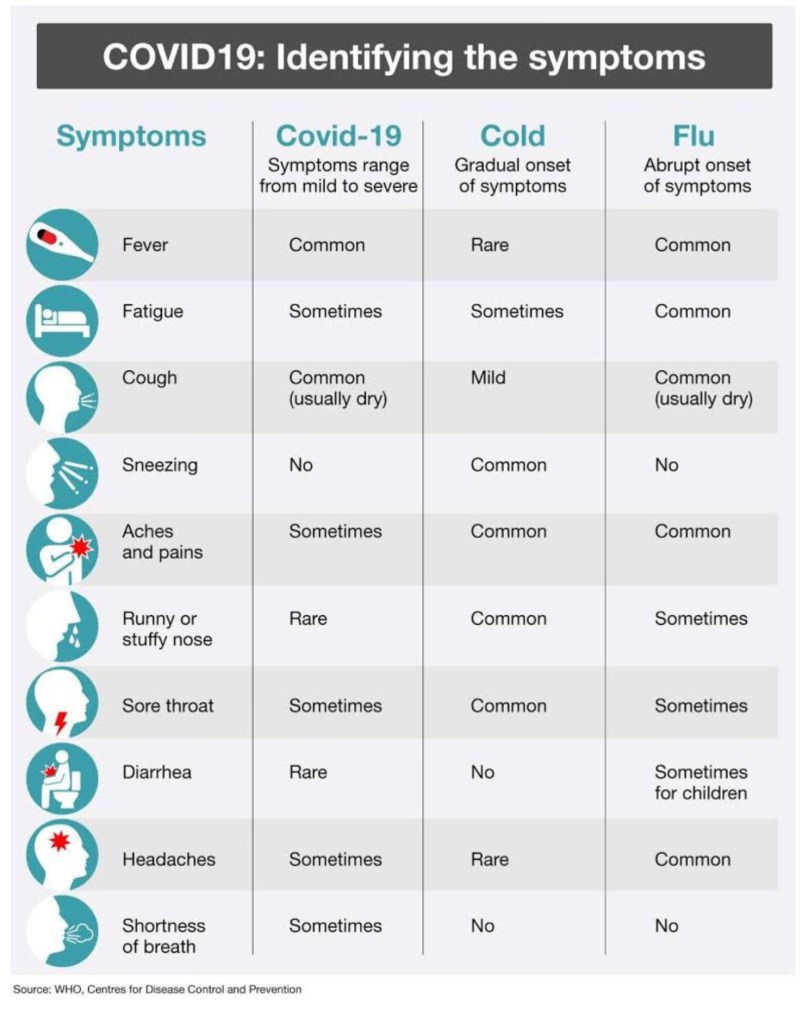
  • Not everyone who has cold or flu-like symptoms is going to have Covid-19. Some will have a regular cold, some will have the flu, and some will just have allergies, which aren’t contagious at all.
    Here’s a handy chart from the World Health Organisation to help you know who to avoid because they’ll give you a cold, or because they’ll give you the flu, or because they might actually have that nasty new virus. 

Things I Am Thankful For Tonight

After two ridiculously hot days –40C or 104F–and a busy first week of the school year, my fibromyalgia pain is going nuts.

It’s currently 11.35pm and still warm out, even though a cool change came through a few hours ago and dropped the temperature by ten degrees in as many minutes. It’s also pouring rain – and I’m not going to complain about that!

I am lying in bed listening to the rain, hoping my pain meds will work quickly, and trying to focus on positive things instead of feeling miserable.

So, in no particular order, here is my list of things I am thankful for tonight:

  • Pain medication
  • Ceiling fans
  • Cool changes
  • Rain
  • Three seasons other than summer
  • My bed
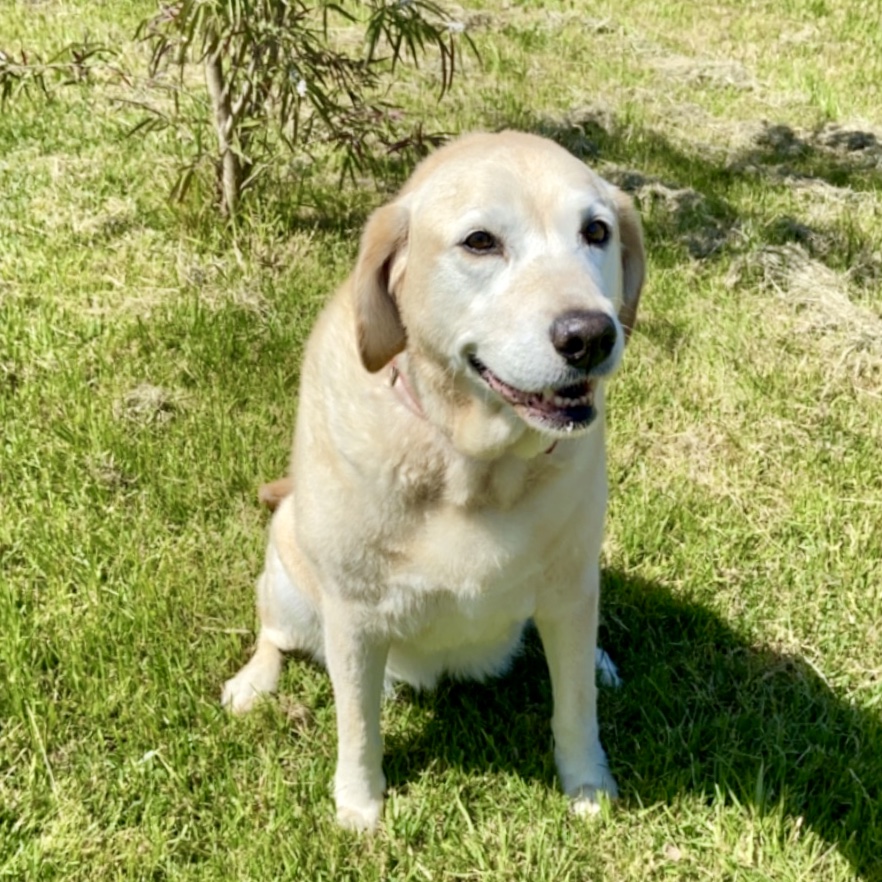
  • Total adoration from Abbey the Labby
Abbey the Labby: so clever, she’s on Facebook.

It’s All Fun and Games…

This article resonates deeply with me on so many levels. My mother used to quote things like this all the time, with her favourite being “Stop it! Stop it! Someone will get hurt in a minute!” My beloved mum is long gone, but this still gets quoted among our family in our best “Mum” voice on a regular basis.

The author of this post makes some really good points about how people treat one another, especially on social media where some seem to think that everything is acceptable because they are hiding behind a screen and a keyboard.

Cruelty is never okay. A joke among friends is one thing: mocking someone, making fun of them, calling names or deriding their character is a different beast altogether.

It really isn’t so hard to be kind. It really isn’t so hard to put yourself in someone else’s shoes and think about how they might feel.

It’s pretty basic, really, to “do to others as you would have them do to you”, but so few people seem to manage it.

In the immortal words of Maxwell Smart, “if only they used their [social media] for goodness instead of rottenness.”

Make good choices, people. Choose the positive. Choose kindness.

cjlanger's avatarc.j. langer

DSCN0502…until somebody loses an eye.

Remember that gem? I’m sure my parents rolled that one out a time or two when I was finally doing something active. I’ve always been risk adverse. Better safe than sorry has been my life’s mission statement.

Yeah, sometimes I think I was born old…

But I want to change this saying to fit our wonderful social media age. I think it should be ‘it’s all fun and games until we need the people we’re making fun of’.

Because as much as I like to think I don’t need people sometimes life is much easier with people. Most of the time they were people I had just met. People who were capable of empathy, capable of being decent, friendly human beings, capable of showing someone respect just because and without judgement.

In other words, not my family…

Now, though, we have a whole generation of…

View original post 379 more words

One Less Star.

A couple of years ago, a friend asked a question on Facebook: “What difference would it make if I wasn’t here anymore?”

I wrote this poem for him.

I also wrote it for those who had never asked me the question — well, not that I know of, at least — and left of their own accord.

Because it is Suicide Prevention Week worldwide, it’s a very appropriate time to share this poem with you. I hope it encourages you.

Just so you know, my friend stayed. And I’m very glad he did.

And if you’re ever in that situation, I hope you will stay, too.

wordynerdbird's avatar

©Promo X One Less Star plain

Tonight
Through the tears
That sprang from your pain
And fell from my eyes,
I looked into the sky
Where there was one less star shining,
And I wept for the world
Where life carries on
Just that bit darker
Than before
You left.

©2017 Joanne Van Leerdam

.

.

img_3407This poem and fifty others are now published in a new collection: The Passing Of The Night.
View original post

What I Have Learned From Blogging 150 Days In A Row

Blogging consistently for 150 days in a row is no mean feat. It takes time, effort, and brain power, and a bit of self-discipline really helps, too. I’m thinking very clever things of myself today, but that’s not the only positive outcome. 

When I first started blogging, I was a bit here and there with it all, which is perfectly fine. Over time, though, I noticed that the more consistent I was, the more consistently my posts were being read. When I managed a three or four day streak, I felt like I had really accomplished something constructive in terms of getting myself “out there” as a blogger,

At the beginning of this year, one of my resolutions was to blog more consistently. I can certainly put a check in that box!  Now that we’ve reached the middle of the year, I have spent some time thinking about what I’ve learned from doing so. 

Goals are highly motivating. When you’re on a long streak, it’s very easy to dismiss thoughts like “I’m too tired” or “not today” and get it done. 

Planning is essential. Sometimes, deciding what to write about is the hardest part. Planning helps to overcome this.  I have developed a list of themes, post ideas and issues to explore. That way, I’ve always got something to write about if there is nothing pressing or timely bobbing around in my head.  Participating in special “months” like Women in History and “National Poetry Month” has helped me to focus my posts during those specific times. This has helped me to attract different kinds of readers to my blog, which is generally quite eclectic in the topics I cover. 

I still want to improve the way I coordinate my planning. I’ve started to time my Shakespeare-related posts to coincide with #ShakespeareSunday on Twitter so that I have an audience to reach that is automatically curated for me by someone else’s design. That’s proven to be very handy, so I want to find more opportunities like that to fit with my interests and content. 

Reblogging is a great way to share sand add value to someone else’s content. I often share other people’s posts via Twitter, and do so very gladly. When I discovered how to reblog someone’s work, that was a revolutionary moment for me. It enabled me to share their work in a more meaningful way than just tweeting it – which is meaningful and helpful, but it doesn’t add any value to the content. 

Reblogging makes it possible to add comments or a reflection of my own on the topic. This is helpful to both them and myself: their content reaches another blogger’s audience, and my content is enriched by theirs. It is also a very good thing to be inspired by what someone else produces, and to let that fuel my own thoughts and words. 

It’s also fair to say that there are times when the tank has been dangerously empty, and those bloggers whose work I have shared have literally saved my day – both by inspiring my post, but by encouraging my mind and spirit when life has been hard. 

Varying the topics attracts different readers. There are blogs dedicated to just one topic. Some of those bloggers do it extremely well. I am probably never going to be one of those people. 

I like to discuss different things that interest me. By mixing it up, I’ve been able to find new readers who like history, or poetry, or horror, or Shakespeare, or who are Indie authors and interested in the issues that relate to our awesome little corner of the publishing universe. These audiences often cross over, so if someone isn’t interested in what I write one day, they probably will be on the next. 

Over the past 150 days, I have seen my readership grow, measurable by the increase in followers on my blog. I find this very exciting, as when I started out, I thought having ten followers was incredible. Actually, given that I had very little clue what I was doing, it probably was incredible!

Consistency increases visibility. I’ve noticed that I’m getting more post likes and engagements from people who weren’t following me previously. I can only assume that this is because my posts are gaining visibility via the WordPress reader as well as on Twitter and via my very amateur attempt at SEO. My rather thorough use of categories and tags might be helping, too.  Whatever the source of the magic, I’ve enjoyed some great feedback and questions from readers that have been both helpful and stimulating. 

Accuracy and accountability matter. When you say something on your blog, you need to be able to back it up. Thankfully, as a History teacher, this is something I’ve always known. So when a reader asked me recently, “What’s your source?” I was able to answer promptly and easily.  I really don’t want to start providing a bibliography for every post I write, but it does matter that I can verify my content when I am called on to do so. 

People want to know who you are, Even though a blog post focuses on a particular topic or idea, readers respond well when you show them something of who you are or what makes you tick. I do not suggest making it all personal or discussing all your private issues in detail, but if readers can see that you are genuine, they will respond to you in positive and encouraging ways 

I am better at blogging than I used to be.  Part of that is in the development of my skills by learning as I go, and part of it is confidence that can only ever come from experience. This has, in fact, been the most motivating lesson of all. If I keep going, I’ll get even better. I don’t know if the world is ready for that, but I am. 

There are, however, still things that remain a mystery to me: 

How do you actually get people to click “like” before they leave? 
How can I get more people to leave a comment or question? 

Those are questions that fall into “next level engagement”. I’ll write that into my goal-setting now. 

Nominated!

Guess who got nominated again for Top Female Author 2019? 

I did, that’s who!

‘Smoke and Shadows’ has been nominated in the Poetry category – the same one in which Nova won in 2017.

It’s fair to say I am excited!

It couldn’t have come at a better time. The crazy busy pace and emotional demands of the last three weeks and the stress I have been under because of things outside my control have really worn me down, and while I’ve enjoyed the release of ‘A Rose By Any Other Name’, I haven’t really given my books or my writing the attention they deserve at all the past month or so.  I’ve started a number of poems lately, but haven’t finished any of them… yet.

It’s really nice to know someone loved my book enough to nominated it. I love it, and I’m proud of it for so many reasons – but that is no guarantee that anyone else is going to. The reviews have been good, though, so I have reason to hope that others will enjoy reading it, too. 

It’s also very timely reminder that there are things which transcend those times of stress and exhaustion in our lives that seem to take over and leave no time or energy for anything else.  

Of course, we know that, but sometimes we forget to keep that thought in our mind. It’s amazing the difference a little bit of encouragement and support can make. 

Winners are announced on July 8th. I’ll be sure to let you know if I win! 

Things For Which I Am Thankful Today

Today, I am feeling very low. So, I am trying to focus on things for which I am thankful. 

I know it won’t fix things, but it’s a positive distraction from my own misery. 

Most of these are in no particular reason, although the first four are in the right place at the top of the list of what I am thankful for today: 

  • My best friend. For so, so many reasons that I can only barely start to count. 
  • Encouragement from friends. Even when life really sucks, they have my back. 
  • My dog. Abbey the Labby always knows when I need extra love. 
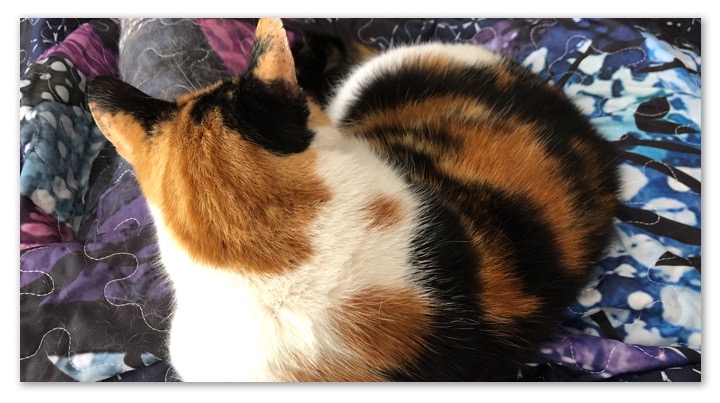
  • Scout Kitty purring on my lap. She, too, has been extra attentive. 
  • The lovely quilt with which I have wrapped myself. It was a gift from my best friend at Christmas time, and given that I can’t hug her today, it’s the next best thing. 
  • The audiobook I’m listening to. It’s good to give my mind something else to do. 
  • Peanut butter on toast. 
  • Coffee. In all honesty, I am thankful for coffee every day. You all should be, too… because even if you’re not drinking it, I am. 
  • Downtime, and the fact that I got all those exams and reports done. I really don’t think I could have maintained that pace much longer. 
  • The fact that I do not have to sit upright on stupid courtroom seats for one single minute of today. My spine has been brutalised this past week. 
  • Pain medication.  Enough said.
  • A Poet’s Curse. I’ve been reading it for therapeutic reasons last night and today. It helps.